How Corporate Giving Put Fresh Vegetables on Students' Lunch Trays
December 22, 2025 | By
This is what happens when corporate giving programs empower employees to support causes they care about — real infrastructure gets built, children’s nutrition improves, and those people making the donation see impact firsthand.
What draws you to school food?
Avery: How are we not all fired up about school food? I read that around 30 million lunches are served around the country in a single day. We have children who rely on that meal for most of their nutrients. I’ve always been passionate about food and have recently taken a more conscious approach to how foods fuel our bodies. I wish there were adults in my district who fought for (school food reform), and I would like to be that voice for my kids.
Kierstin: I think that helping children form healthy eating habits in such formative years is crucial, and it is super exciting that schools can help provide this for them.
Belle: I studied nutrition in college and quickly realized that for many kids, school food is their first real exposure to nutrition and healthy eating. I interned with Whole Kids Foundation and learned how school food can transform how students eat and think about food. When schools invest in high-quality meals, it supports better health, improves learning, and reduces hunger. I’m deeply passionate about food access and education, and school food feels like one of the most powerful ways to make a positive impact.

What draws you to school food?
Avery: How are we not all fired up about school food? I read that around 30 million lunches are served around the country in a single day. We have children who rely on that meal for most of their nutrients. I’ve always been passionate about food and have recently taken a more conscious approach to how foods fuel our bodies. I wish there were adults in my district who fought for (school food reform), and I would like to be that voice for my kids.
Kierstin: I think that helping children form healthy eating habits in such formative years is crucial, and it is super exciting that schools can help provide this for them.
Belle: I studied nutrition in college and quickly realized that for many kids, school food is their first real exposure to nutrition and healthy eating. I interned with Whole Kids Foundation and learned how school food can transform how students eat and think about food. When schools invest in high-quality meals, it supports better health, improves learning, and reduces hunger. I’m deeply passionate about food access and education, and school food feels like one of the most powerful ways to make a positive impact.
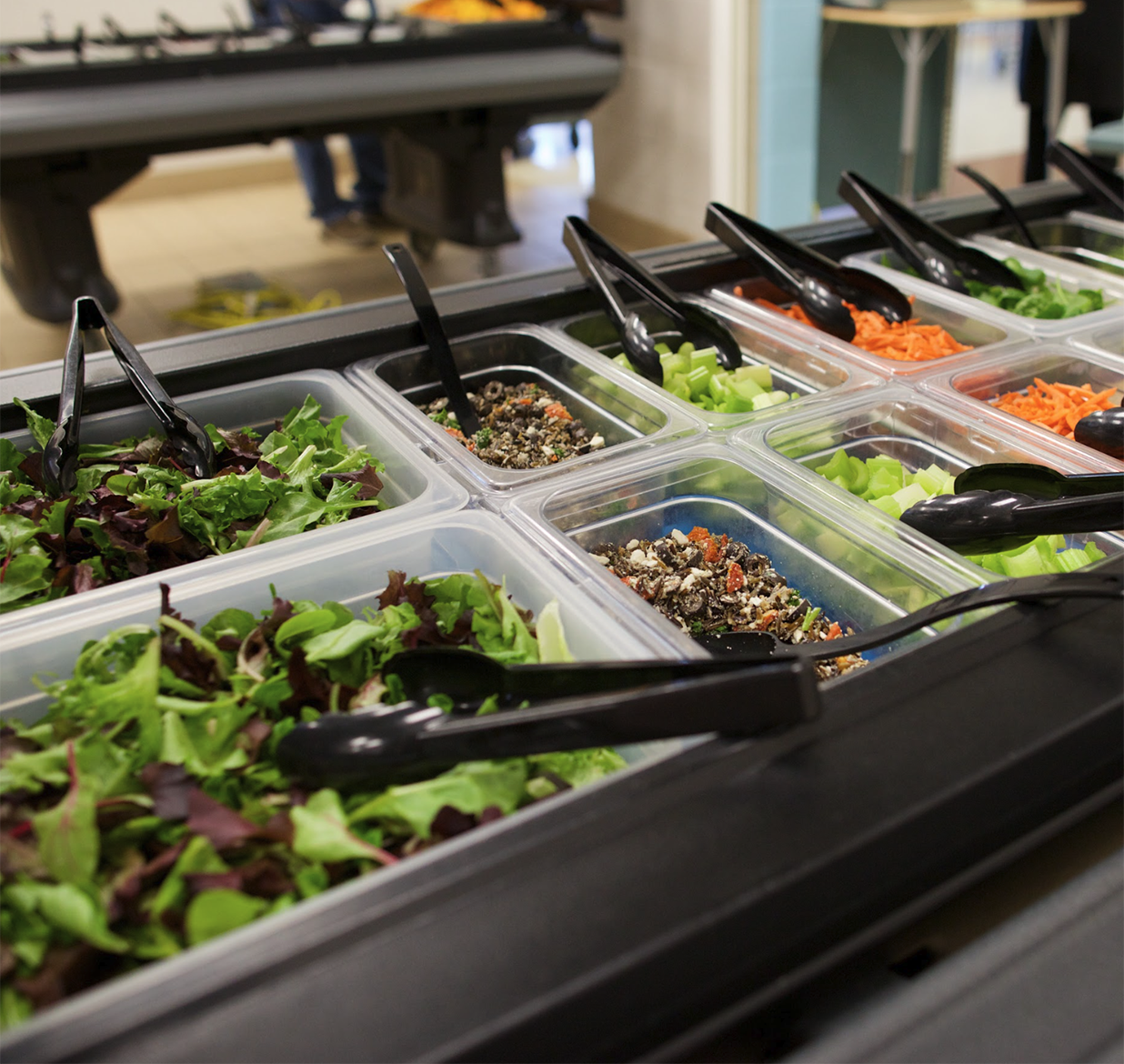
Tell us about your Rainbow Day at Emerald Elementary School. What was it like to see the salad bar in action?
Kierstin: Rainbow Day was so much fun! As each grade came in, we wore vegetable costumes (I was a carrot) and spoke to students as they went through the lunch line and salad bar. We also got to pass out bracelets if they got three colors on their trays. The bracelets had seeds in them and would turn into wildflowers if planted.
Avery: I think my favorite part was asking if the beet or watermelon radish they tried was what they expected. Then getting the reaction of good or bad (mostly BIG thumbs up or BIG thumbs down)! I had the impression it would be more of a conversation to get them to put a veggie or two on the tray, but I was happily surprised to see how willing and eager they were. We have this perception that it’s so hard to get vegetables and fruit in front of our kids, but I don’t think that is the case. I believe it is how they are presented.

Tell us about your Rainbow Day at Emerald Elementary School. What was it like to see the salad bar in action?
Kierstin: Rainbow Day was so much fun! As each grade came in, we wore vegetable costumes (I was a carrot) and spoke to students as they went through the lunch line and salad bar. We also got to pass out bracelets if they got three colors on their trays. The bracelets had seeds in them and would turn into wildflowers if planted.
Avery: I think my favorite part was asking if the beet or watermelon radish they tried was what they expected. Then getting the reaction of good or bad (mostly BIG thumbs up or BIG thumbs down)! I had the impression it would be more of a conversation to get them to put a veggie or two on the tray, but I was happily surprised to see how willing and eager they were. We have this perception that it’s so hard to get vegetables and fruit in front of our kids, but I don’t think that is the case. I believe it is how they are presented.
The Power of Seeing Your Impact
What makes employee-directed giving programs so powerful is the personal connection. Avery, Belle, and Kierstin didn’t just authorize a donation; they witnessed kids enthusiastically trying watermelon radishes for the first time, saw the “big thumbs up” reactions, and understood viscerally how infrastructure like salad bars changes lives.
This is the ripple effect of workplace giving done right: employees find deeper meaning in their work, communities receive targeted support based on real needs, and children gain access to the nutrition they need to learn and thrive.
The Power of Seeing Your Impact
What makes employee-directed giving programs so powerful is the personal connection. Avery, Belle, and Kierstin didn’t just authorize a donation; they witnessed kids enthusiastically trying watermelon radishes for the first time, saw the “big thumbs up” reactions, and understood viscerally how infrastructure like salad bars changes lives.
This is the ripple effect of workplace giving done right: employees find deeper meaning in their work, communities receive targeted support based on real needs, and children gain access to the nutrition they need to learn and thrive.